Why Protecting Data in Transit Should Be Your Top Priority – Not Just Monitoring Network Activity

We explain why focusing on protecting data in transit is essential and how it can protect your business from sophisticated cyber threats

Why Protecting Data in Transit Should Be Your Top Priority – Not Just Monitoring Network Activity

In seeking to protect valuable, sensitive information that all businesses maintain, many organizations prioritize network activity monitoring as their primary line of defense against cyber threats. While monitoring is important, it’s not enough on its own. One of the most overlooked but critical aspects of security is protecting data in transit — the data that moves between devices, networks, or cloud services.

In this blog post, we’ll explain why focusing on securing data in transit is essential and how it can protect your business from sophisticated cyber threats. We’ll also highlight how data protection through quantum cryoptography and security best practices can give you peace of mind that monitoring alone can’t provide.

The Growing Threat to Data in Transit

When data is transmitted between different points (like between your company’s internal network and an external cloud server), it’s particularly vulnerable to attacks. This stage of data movement is known as data in transit or data in motion. Hackers constantly look for opportunities to intercept this data during transmission, hoping to steal, manipulate, or exploit it for malicious purposes.

Common threats to data in transit include:

  • Man-in-the-middle (MITM) attacks: Hackers position themselves between two communicating parties to intercept and even alter the data being sent.
  • Eavesdropping: Cybercriminals can listen in on unencrypted communications, capturing sensitive information like passwords, financial data, or personal details.
  • Packet sniffing: Attackers use special tools to capture and analyze data packets as they travel across networks, which can expose confidential data.

While monitoring network activity helps detect these kinds of attacks after they happen, it doesn’t prevent them. This is where the focus on securing data in transit comes into play.

Why Protecting Data in Transit Matters More Than You Think

  1. Prevention is Better Than Detection

Monitoring network traffic helps identify suspicious activity, but it’s reactive. By the time a threat is detected, the damage may already be done. On the other hand, protecting data in transit with strong quantum based encryption actively prevents hackers from being able to read or exploit sensitive information, even if they manage to intercept it.

Imagine sending an unencrypted email that contains your company’s financial data. If a hacker intercepts that communication, they can read it easily. Now, if that email is protected by strong cryptography and a key controlled by the customer, even if it’s intercepted, the hacker will be unable to decipher the information.

  1. Comply with Regulations and Standards

Protecting data in transit is often a regulatory requirement. Many data protection regulations, such as GDPR, HIPAA, and PCI DSS, require businesses to encrypt sensitive data during transmission. Non-compliance can result in heavy fines and penalties, not to mention the loss of customer trust.

For example, Payment Card Industry Data Security Standard (PCI DSS) requires credit card data transmitted over public networks to be encrypted. Simply monitoring your network won’t meet this standard, but encrypting your data in transit will.

  1. Guard Against Man-in-the-Middle (MITM) Attacks

MITM attacks can happen on any network, especially unsecured ones like public Wi-Fi. In these attacks, an attacker intercepts the data being sent between a sender and receiver, without either party knowing. They can steal login credentials, personal information, or other sensitive data. Protecting data in transit using end-to-end encryption can prevent attackers from accessing or tampering with your data, even if they manage to intercept it.

  1. Secure Communication with Cloud Services

With more businesses moving their operations to the cloud, ensuring secure communication between local systems and cloud services is vital. Data traveling to and from the cloud needs strong encryption to prevent exposure during transmission.

Without encrypting data in transit, your sensitive information could be intercepted at various points on its journey to the cloud provider.

  1. Prevent Unauthorized Data Modification

Not only can attackers steal data in transit, but they can also modify it. Imagine a scenario where an attacker intercepts and changes a file during transmission, potentially causing irreversible damage or confusion.

Encryption protects against unauthorized data modification by ensuring the data’s integrity. This is particularly important when used in conjunction with immutable backup solutions – the backup is only as good as the data it receives, if that data is tampered with then the backup is useless.

How to Effectively Protect Data in Transit

To safeguard data in transit, you need to take proactive steps. Start from the assumption that your data will be the target of an attack and plan accordingly. A solution such as Certes DPRM (Data Protection and Risk Mitigation) is focused on protecting the data in transit, it does this in a way that is transparent to other network devices and services. The data is protected using quantum based techniques and includes key material unique to the customer that is changed per data flow every hour. The result is a data set that is only available to the customer and their intended recipient and no one else – no service provider, no network vendor and certainly no attacker.

Don’t Just Monitor, Secure Your Data

While monitoring network activity is an essential part of a strong security posture, it’s only one piece of the puzzle. Protecting data in transit is proactive, ensuring that your sensitive information remains safe even if it’s intercepted by malicious actors. By adopting Certes DPRM, and best practices, you can prevent many common cyberattacks and keep your business safe.

Remember, prevention is key in cybersecurity. Securing data in transit should be a top priority, not an afterthought.

Protect your data on the move — because it’s not just about knowing who’s trying to access it, it’s about ensuring that no one unauthorized ever can.

By emphasizing the proactive protection of data in transit, businesses can ensure that sensitive information stays secure and continues to build customer trust.

Contact us to find out how Certes DPRM protects your data in transit, ensuring sensitive information stays secure and protected from unauthorised access.

Go deeper

Practical resources on this subject.

Browse all resources
  • Executive Liability Is Real: Why Data Protection Now Sits in the Boardroom

    Blog

    Executive Liability Is Real: Why Data Protection Now Sits in the Boardroom

    If your organization mishandles sensitive data, regulators will knock on the boardroom door – and you could be personally liable. It’s time to stop securing the castle and start protecting the crown jewels: your data.

    Feb 2026

  • NYDFS Expects End-to-End Control of Sensitive Data. Can You Prove It?

    Blog

    NYDFS Expects End-to-End Control of Sensitive Data. Can You Prove It?

    NYDFS no longer accepts fragmented controls or blind trust in cloud defaults. Regulators now expect financial institutions to prove how sensitive data is protected everywhere it flows, from internal systems to third-party services. This blog breaks down the most overlooked compliance gaps and explains how Certes DPRM gives teams full control and evidence-ready protection that stands up to NYDFS scrutiny.

    Nov 2025

  • The New NYDFS Standard: Prove Your Data Is Secure, or Face Penalties

    Blog

    The New NYDFS Standard: Prove Your Data Is Secure, or Face Penalties

    NYDFS is done accepting security on paper. Regulators now want proof that Nonpublic Information is protected everywhere it moves, across every cloud, system, and vendor. Firms that can’t show this are already facing million-dollar penalties. Certes DPRM gives institutions a clear, auditable answer to the question: how is your data actually protected?

    Nov 2025

  • HIPAA Safeguards for Data in Motion: Securing Legacy Healthcare Networks

    Blog

    HIPAA Safeguards for Data in Motion: Securing Legacy Healthcare Networks

    Hospitals across the US rely on legacy infrastructure that was never built to meet today’s cybersecurity demands. Protected Health Information (PHI) must still meet the security and privacy requirements laid out in HIPAA. That’s the challenge facing nearly every hospital IT team: how to meet modern data protection requirements using outdated, hard-to-replace systems.

    Nov 2025

  • HIPAA Compliance Without the Rip & Replace

    Whitepaper

    HIPAA Compliance Without the Rip & Replace

    Discover how Certes DPRM helps U.S. healthcare providers meet HIPAA Privacy and Security Rule requirements—without replacing legacy systems. Protect high-risk medical data in motion, reduce breach costs, and ensure compliance with a lightweight, non-invasive solution.

    Nov 2025

  • Why Data Breach Damage Runs Deeper Than You Think

    Infographic

    Why Data Breach Damage Runs Deeper Than You Think

    The headlines cover the breach. But what really brings companies down happens beneath the surface—regulatory fines, executive fallout, customer churn, and shareholder lawsuits. Jaguar Land Rover lost £1.9 billion. M&S dropped £1 billion in market value. These go beyond the headlines; they’re business-ending events. Discover how DPRM can help reduce your risk, protect your data, and avoid becoming the next headline.

    Nov 2025

  • Boardroom Cybersecurity: Why Liability Has Shifted to Executives

    Blog

    Boardroom Cybersecurity: Why Liability Has Shifted to Executives

    There was a time when a data breach was an IT problem. Those days are gone. Today, cybersecurity has climbed the corporate ladder right to the top floor.

    Oct 2025

  • Cloud Sovereignty Is a Myth Without Control of Your Data

    Blog

    Cloud Sovereignty Is a Myth Without Control of Your Data

    If your cloud provider can hand over your data without your knowledge, your cloud strategy is already a compliance failure. The idea that hosting data in a specific geographic region ensures sovereignty is a dangerous illusion. Data location means nothing if you don’t control access to it.

    Aug 2025

  • Quantum-Safe by Default: Navigating CJIS 6.0 Compliance with Certes DPRM

    Blog

    Quantum-Safe by Default: Navigating CJIS 6.0 Compliance with Certes DPRM

    CJIS 6.0 is more than an update, it’s a critical step toward achieving and maintaining full CJIS compliance in an evolving threat landscape. With sweeping changes to cryptographic requirements, system protection, access control, and cloud adoption, criminal justice agencies are under pressure to modernize fast. The challenge for CJIS compliance? Meeting these demands without compromising data control or operational continuity.

    May 2025

  • Achieving DORA Compliance: Best Practices for Securing Data in Transit

    Blog

    Achieving DORA Compliance: Best Practices for Securing Data in Transit

    Among the many aspects of digital resilience that DORA addresses, protecting data in transit plays a critical role in ensuring compliance with this regulation. In this blog post, we will explore why safeguarding data in transit is essential under DORA and how it helps businesses meet compliance requirements while protecting sensitive financial information.

    Oct 2024

  • NIS2 Compliance: What You Need to Know and Why It Matters

    Blog

    NIS2 Compliance: What You Need to Know and Why It Matters

    The updated NIS Directive (NIS2), with an implementation date of 17 October 2024, is designed to address the dynamic and evolving nature of cyber threats, ensuring that Europe’s critical infrastructure remains resilient and secure in the face of an increasingly hostile digital landscape. We outline the key changes to the NIS Directive and how your organisation can prepare for NIS2 compliance.

    Aug 2024

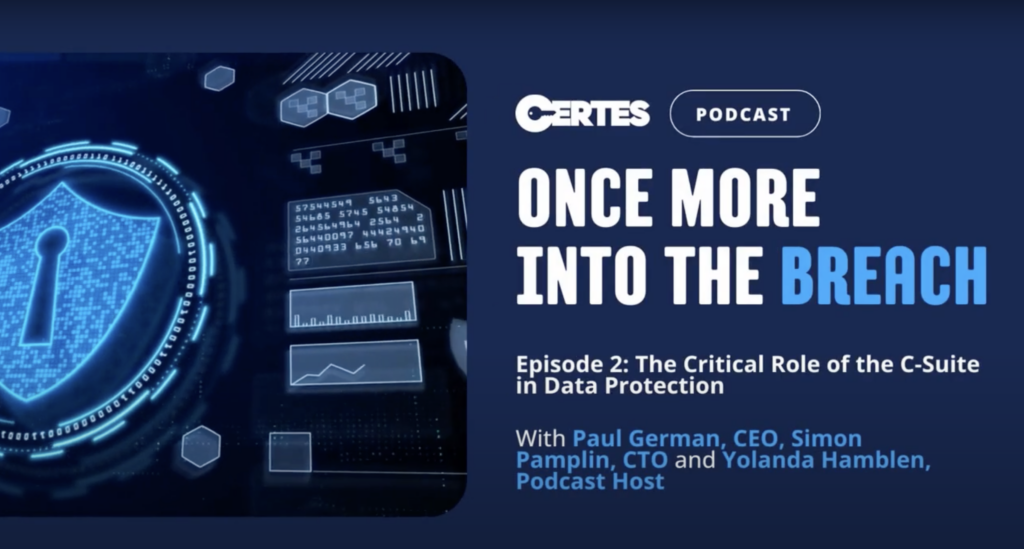
  • Once More into the Breach, Episode 2: The Critical Role of the C-Suite in Data Protection

    Video

    Once More into the Breach, Episode 2: The Critical Role of the C-Suite in Data Protection

    From GDPR to PCI compliance, regulatory bodies are tightening their grip, holding C-suite executives personally accountable for data breaches. With fines reaching millions and the spectre of potential imprisonment, the stakes have never been higher for both data protection and risk mitigation strategies.

    Jul 2024

  • Data Protection and Risk Mitigation and the TSA SD02D Mandate

    Blog

    Data Protection and Risk Mitigation and the TSA SD02D Mandate

    The recent ransomware attack on the Colonial Pipeline shook the cybersecurity landscape, forcing a re-evaluation of our national infrastructure’s vulnerability. In response, the Cybersecurity and Infrastructure Security Agency (CISA) and the Transportation Security Administration (TSA) collaborated on the Security Directives, known as TSA SD02D. We dive into the practical aspects of cybersecurity, exploring the implications

    Jan 2024

  • Meta's $1.3 Billion GDPR Fine: Lessons in Data Protection

    Blog

    Meta's $1.3 Billion GDPR Fine: Lessons in Data Protection

    In May 2023, we witnessed Meta incur a staggering $1.3 billion GDPR fine, making it the largest-ever fine imposed by the European Union. But what lessons can companies learn from this breach? We delve further into the concept of data sovereignty and the challenges faced by companies like Meta in protecting user data.

    Oct 2023

  • Data Sovereignty: Protecting Your Data in a Globalised World

    Blog

    Data Sovereignty: Protecting Your Data in a Globalised World

    The implications of transferring data between different countries, the role of Managed Service Providers (MSPs) in data governance, and the potential risks and costs associated with data breaches.

    Jul 2023

  • The Legal Liability Dilemma

    Blog

    The Legal Liability Dilemma

    How do security leaders navigate the aftermath of a data breach? In the rapid pace of today’s digital landscape, data breaches have become an unfortunate reality for organisations worldwide. As these incidents continue to rise, a growing concern among security leaders, particularly Chief Information Security Officers (CISOs), revolves around their legal liability following such breaches.

    Jul 2023

  • End-to-End Data Protection for ITAR Compliance

    Blog

    End-to-End Data Protection for ITAR Compliance

    ITAR compliance has been designed to control access to the various types of technology and information associated with the organisation controlled by ITAR. It’s in place to prevent the disclosure of sensitive data to safeguard US national security.

    Apr 2023

  • NIS2 Compliance Checklist

    Checklist

    NIS2 Compliance Checklist

    The NIS2 Directive from the EU brings new requirements for businesses to boost cybersecurity, conduct regular audits, and quickly report incidents. These rules are mandatory for organisations offering essential services, but they’re also important for anyone wanting to work with those organisations. We’ve put together a checklist on how you can get your business ready

  • AES-256-GCM & Quantum-Based Multi-Part Key in the Context of NIST PQC Compliance

    Whitepaper

    AES-256-GCM & Quantum-Based Multi-Part Key in the Context of NIST PQC Compliance

    As quantum computing advances, traditional cryptographic methods face increasing vulnerabilities, making post-quantum cryptography (PQC) compliance essential for long-term data security. This paper examines how Certes DPRM, leveraging AES-256-GCM encryption and a quantum-based multi-part key, aligns with the National Institute of Standards and Technology’s (NIST) PQC framework to provide quantum-resistant data protection.

  • PCI DSS v4.0.1 Compliance

    Compliance Brief

    PCI DSS v4.0.1 Compliance

    Developed by the major credit card issuers, the Payment Card Industry Data Security Standard (PCI DSS) outlines best practices and requirements for processing, transmission and storage of consumer credit card information.

  • Aligning Certes Quantum Safe DPRM with CJIS Security Policy Version 6.0 for Agency Compliance

    Whitepaper

    Aligning Certes Quantum Safe DPRM with CJIS Security Policy Version 6.0 for Agency Compliance

    This white paper explores how Certes’ quantum-safe DPRM solution aligns with CJIS Security Policy Version 6.0, helping agencies meet compliance requirements through centralized key ownership, encrypted data-in-transit, and streamlined reporting—while maintaining operational flexibility and future-proof security.

  • Ensuring Operational Resilience: A Guide to Securing Data in Transit for DORA Compliance

    Whitepaper

    Ensuring Operational Resilience: A Guide to Securing Data in Transit for DORA Compliance

    This whitepaper outlines the importance of safeguarding data in transit, explains how it fits into the broader objectives of DORA, and offers practical strategies for financial institutions to ensure compliance. With a focus on technologies like Certes DPRM, this paper highlights how organizations can secure their data flows, mitigate third-party risks, and build a more resilient digital infrastructure.

  • Certes for Federal Agencies

    Infographic

    Certes for Federal Agencies

    Federal systems are under relentless attack — from foreign adversaries, insider threats, and zero-day exploits. Even with cloud-first strategies, endpoint controls, and zero trust architectures, attackers are logging in — not breaking in. Certes DPRM protects what others can’t see.

  • Navigating Data Sovereignty: Lessons from the Meta Breach

    Whitepaper

    Navigating Data Sovereignty: Lessons from the Meta Breach

    Earlier this year, Meta was issued the largest fine ever by the European Union for a GDPR breach at a whopping $1.3 billion. The fine came into place as Meta violated EU privacy laws by transferring the personal data of Facebook users to servers in the United States.

  • Cybersecurity as a Business Imperative: Certes and the TSA SD02D Mandate

    Whitepaper

    Cybersecurity as a Business Imperative: Certes and the TSA SD02D Mandate

    The TSA has introduced sensible changes, such as testing cybersecurity policies in real-world scenarios to ensure their effectiveness. Certes cutting-edge DPRM Crypto-Segmentation technology stands at the forefront of safeguarding essential systems, surpassing regulatory mandates such as the TSA SD02D mandate. The overarching mission is to empower organisations to securely navigate our interconnected world.

Ready to protect the data that matters?

Talk to Certes about protecting sensitive data today.

Reduce exposure now, while your wider security and cryptographic transformation continues.